Kelly Cobey

Kelly Cobey is a Scientist and the Director of the Metaresearch and Open Science Program at the University of Ottawa Heart Institute and an Associate Professor in the School of Epidemiology and Public Health at the University of Ottawa. She is co-chair of DORA and the recipient of the John Maddox Early Career Award (2024).

Bridging the Research Data Management Gap: How Canadian institutions are transforming to new data policies

August 16, 2025 | 4 minute read

The Metaresearch and Open Science Program at the University of Ottawa Heart Institute (UOHI), led by Dr. Kelly Cobey, features a team of researchers interested in a range of topics, including the implementation of open science, the reporting quality of research, data management and sharing best practices, research reproducibility, and patient engagement in research. Dr. Anna Catharina Armond is a postdoctoral student in the program. Chantal Ripp is a former research assistant in the program who is presently pursuing her PhD in Digital Transformation and Innovation at uOttawa.  

With the rapid growth of digital research, managing data effectively has never been more important. Proper data management ensures research is conducted ethically, maximizes the value of public funding, and makes research findings more accessible. That’s why the Canadian Tri-Agency introduced their Research Data Management (RDM) Policy in 2021. 

The Tri-Agency RDM Policy has three main requirements: 

1. Institutions need a public RDM strategy

2. Researchers must submit Data Management Plans (DMPs) for certain grants

3. Grant recipients must deposit research data in a digital repository.  

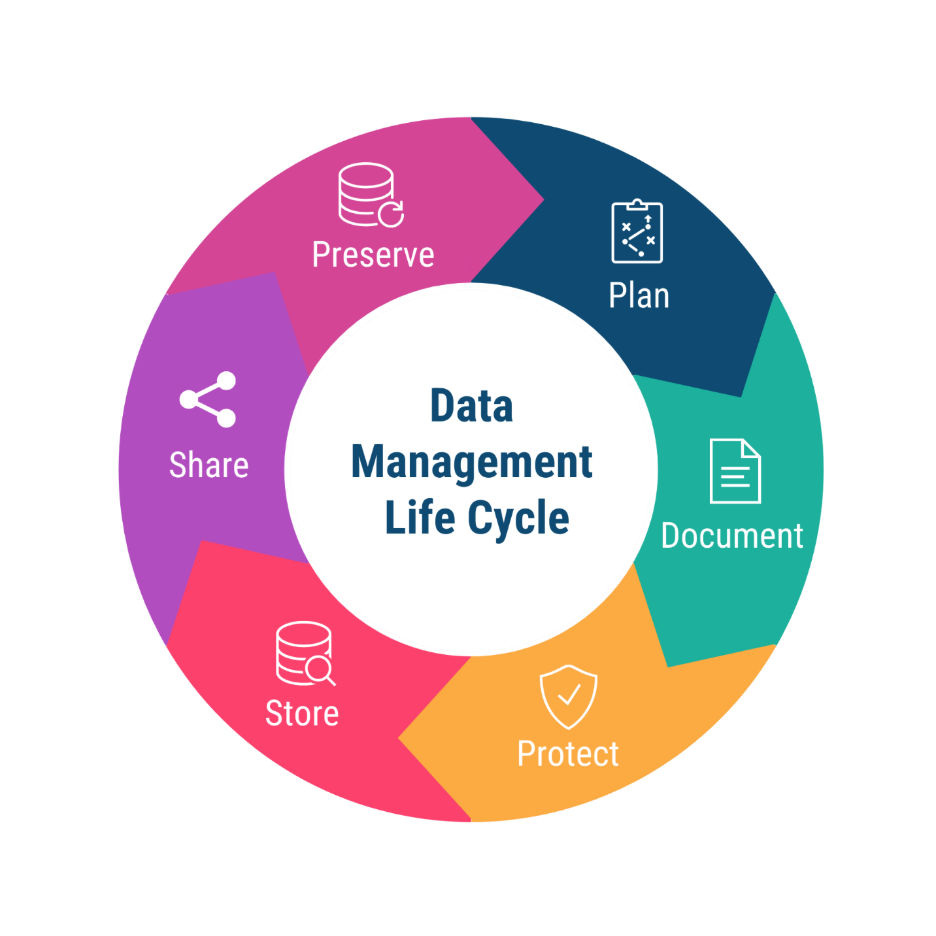
Research data management lifecycle, comprising the processes: plan, document, protect, store, share, and preserve.
Research Data Management Life Cycle. CC BY-NC-SA Anna Catharina Vieira Armond

We recently mapped out 211 publicly available RDM strategies produced by Canadian institutions in response to the RDM policy mandate. In mapping these strategies, we hoped to better understand how institutions are responding to the need to formalize RDM processes. Check out the article for our mapping approach. The results? A mix of progress, challenges, and further opportunities.

Institutional RDM strategies: The Good, The Bad, and The Gaps 

The Good The Bad The Gaps
The near-universal reference to DMPs in institutional RDM strategies (195, 92%) reflects the emphasis placed on planning for data management. We found that 91 (43%) institutions were aware of DMP assistant, a national bilingual tool provided by the DRAC for creating data management plans, suggesting that this national infrastructure is not fully cemented within research institutions. This may reflect lack of awareness or potentially lack of perceived value among researchers. While 167 (79%) institutions mention Indigenous data sovereignty in their strategies, few have concrete plans to work with Indigenous communities on how their data should be handled.
74% of institutions identified developing bespoke internal RDM training to support implementation of its strategy —good news because many academics are still figuring out what RDM even means in context to their data! There’s still a lack of infrastructure for sensitive data storage. If a research project involves personal health data, for example, there’s no national system in place to store it securely, yet.

Clarity on deidentification standards will be critical to this discussion too.

Universities had a higher rate of developing consultation and training services to support DMP development as part of their strategies. Less research intensive institutions are focused on directing to training/resources/guides for support in the development of data management plans.
10 years of impact. What’s next? Define the next decade of Canadian research by contributing to FACETS’ anniversary collection. HOW TO CONTRIBUTE

Our view is that strides in effective RDM will only be possible if researchers and their institutions proactively create DMPs; we view formal data management as a critical gap essential to address to drive improvement. A DMP is a formal document that outlines how to handle data during and after a research project. It helps ensure compliance with data management best practices and facilitates responsible data sharing, emphasizing data integrity, transparency, and reuse. If one of the goals of the Tri-Agency RDM policy is to increase the availability of data for downstream use—ie., reproducibility checks, big data analytics, and innovation—we need formal planning to achieve this. Despite institutional commitments to data management, in the absence of formalization of data management practices, we are concerned that many data deposits will not be fit-for-purpose. 

The Bigger Picture: Culture Change Needed 

Right now, researchers aren’t always rewarded for good RDM practices. In many scholarly disciplines, the currency for success is publishing academic papers and particularly doing so in high impact factor journals. If publishing papers alone is what counts for career advancement, and sound RDM practices such as depositing clean, well-documented datasets are not “counted,” we anticipate limited cultural change in RDM practices. We are nonetheless encouraged by grassroots initiatives, including “data champions” programs to promote best practices. Some institutions are also setting up or reinvigorating governance committees to oversee RDM strategies long-term, and we anticipate discussions of incentives and rewards for RDM to be widely discussed.  

Final Thoughts: What’s Next? 

Variability in resources and capacity identified across institutional strategies highlights the need for resource sharing and novel funding mechanisms. As Canada moves towards full enforcement of the Tri-Agency RDM policy, we see need for greater coordination. Possible actions could include to:  

  • Develop a community of practice to share resources and address similar concerns in a unified way to reduce spending and duplication of effort. 
  • Make RDM training mandatory and more accessible to varied disciplinary contexts. These training resources and practical tools are best co-built with researchers who use them. Take as an example the suite of online modules addressing various aspects of RDM produced by the Ottawa Data Champions Team to address the diverse needs of the biomedical research community. 
  • Develop better support systems for researchers handling sensitive data. This includes addressing best practices for deidentification. 
  • Offer real incentives for good data management and consequences for failing to manage data robustly. 

Ultimately, Canadians fostering a robust RDM culture benefits all actors in the research ecosystem both domestically and internationally.  

Kelly Cobey

Kelly Cobey is a Scientist and the Director of the Metaresearch and Open Science Program at the University of Ottawa Heart Institute and an Associate Professor in the School of Epidemiology and Public Health at the University of Ottawa. She is co-chair of DORA and the recipient of the John Maddox Early Career Award (2024).