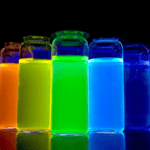

Meet some of the Canadian Society for Chemistry’s (CSC) 2024 ChemiSTEAM contest winners! We reached out to the winners to learn more about their unique approach to blending science and art. The Canadian Journal of Chemistry is featuring these images on our covers this year—keep an eye out for them in upcoming issues!
Art in Science – ChemiSTEAM Contest 2024
Interested in seeing your work on the cover of the Canadian Journal of Chemistry? Authors of all accepted manuscripts are invited to contribute images for consideration. Visit our Cover Image Submission page to learn more.
The 2025 ChemiSTEAM contest will be hosted again this year, and co-organizers Louise Dawe (Wilfred Laurier University), Brian Wagner (University of Prince Edward Island) and Vance Williams (Simon Fraser University) are hosting a symposium at CSC 2025 on “Art and Chemistry” – look for it in the Chemistry Education program!
Ameer Nizami
Concordia University, first-place winner
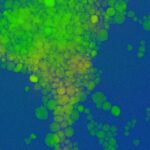
A Molecular Ballet: This image depicts titanium nitride, a promising material for improving the reliability of lithium-sulfur battery cathodes. Researchers identified this optimal coating material using computational modeling. Lithium sulfide molecules, shown in purple and yellow, bind to the coating during charging and discharging. My research aims to enhance this interaction, boosting battery performance and capacity. Credit: Ameer Nizami
Artist’s Statement:
The video is based on an optimized titanium nitride (TiN) structure, computationally refined using Density Functional Theory (DFT) simulations. I used the Quantum Espresso software to model the TiN and lithium-sulfur interactions. After optimizing the structure, I exported it as a .pdb file and imported it into Blender for visualization. I then animated the trajectories of the lithium sulfide molecules based on the modeling results. The animation shows the dynamic behaviour of the lithium sulfide molecules as they adsorb and desorb during the battery charging and discharging processes. The colouring is based on the Corey-Pauling-Koltun colour convention: the titanium nitride slab is shown in silver and blue, while the lithium sulfide molecules are depicted in purple and yellow.
I find that my science often inspires my art, because it requires creativity and visualization to communicate such complex concepts. When observing my results from modeling, shifting through the images made me think the molecules were dancing above the surface. I decided to take that a step further and render it in a proper artistic toolbox.
My research focuses on improving the reliability and performance of lithium-sulfur batteries, which have great potential for energy storage but face limitations related to the cathode’s stability and efficiency. The main challenge is optimizing the interaction between the cathode material and the lithium sulfide molecules that undergo chemical reactions during charging and discharging. The overarching research goal is to enhance the coating materials, specifically through computational modeling, to improve charging rates and increase battery capacity.
Currently, I’m focused on further improving the interaction between coating materials and lithium sulfide molecules through both theoretical and experimental approaches. I’m also experimenting with different materials, such as polymers, to see how they enhance the cathode’s performance.
Curious to learn more about Ameer’s chemistry? Check out the Pesleherbe and Li group websites.
Ameer’s winning image was featured on the cover of the Canadian Journal of Chemistry, Volume 103, Number 4.
Victoria Lapointe
Concordia University, third-place winner
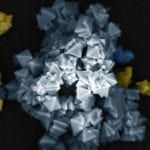
Building a Microscopic Rainbow: This video shows synthetic opal microbeads viewed under a microscope, illuminated with a moving flashlight. The colours we see do not come from a pigment but originate from the ordered internal structure of photonic crystals, which manipulate and direct light. Credit: Victoria Lapointe.
Artist’s Statement:
The video was taken on a Laxco™ LMC-2000 Compound Microscope equipped with a SeBaCam Digital Microscope Camera (with SeBaView Software). The photonic crystal–perovskite nanocrystal hybrid microbeads were suspended in silicon oil, and the microscope light turned off to highlight the effect of the moving flashlight above. The colours seen in the video are purely thanks to the photonic crystals and perovskite nanocrystals, no editing required!
I find it easy to be inspired by my research, as the materials I work with are extremely colourful, emissive, and pretty to look at through electron microscopy. The materials bring their own flare without requiring much artistic input from me, just a decent amount of scientific input.
At the time, I was working on a research project that aimed to combine the optical properties of photonic crystals with light-absorbing semiconductor nanocrystals to develop hybrid materials for solar energy conversion. More specifically, the goal was to use light manipulation from the photonic crystal to increase the light directed to embedded perovskite nanocrystal to increase the efficiency of sunlight capture.
Right now, I am working on the self-assembly of perovskite nanocrystals into micrometer-sized supercrystals. These perovskite supercrystals are gaining popularity as they demonstrate highly ordered structures rare for three-dimensional building blocks and have shown potential for collective photophysical properties. I have investigated how protecting these perovskite nanocrystals with a metal oxide shell does not inhibit their assembly into these highly ordered supercrystals and allows them to retain that assembled structure for much longer timeframes compared to their unshelled samples. I am also currently investigating the structural (and soon the photophysical) effects of ion doping on the self-assembly of perovskite supercrystals.
Curious to learn more about Victoria’s work? Visit the Concordia Solar Energy Conversion Group website or connect with Victoria professionally on LinkedIn!
The Canadian Journal of Chemistry reports on all branches of chemistry, including interdisciplinary areas such as materials science, spectroscopy, chemical physics, and medicinal and environmental chemistry.
Cristina Pomilio
Concordia University, honourable mention
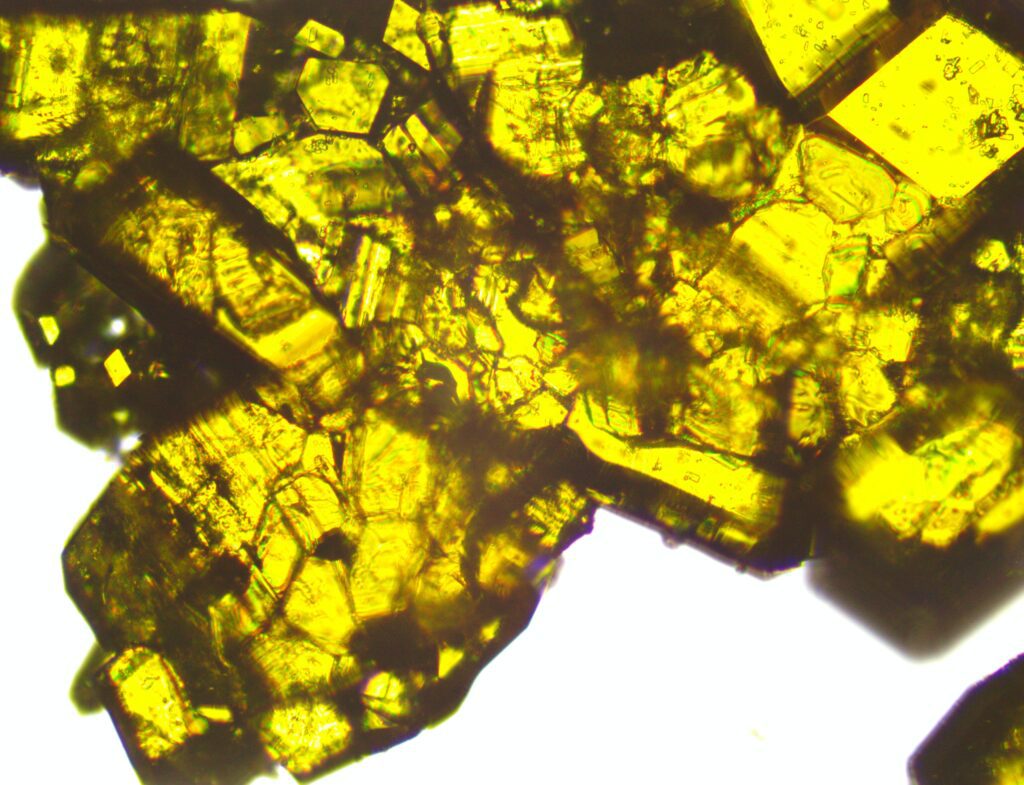
Multitude of Unique Iron Battery Crystals: This image shows a multitude of unique crystals produced from simple iron coordination complexes. These iron crystals are used as low-cost, aqueous and sustainable (redox-active) electrolytes in redox flow batteries (RFBs). RFBs are being investigated for the electrochemical storage of energy produced by large scale renewable sources. Credit: Cristina Pomilio
Artist’s Statement:
This image shows one of the first iron crystals I looked at under a microscope. I selected specific crystals from my synthesized iron complex and placed them on a glass slide for viewing under an optical microscope. The resolution of the microscope was adjusted until a clear image was attained.
Although I wasn’t expecting it, I was amazed at just how golden these iron crystals were. Ever since visualizing these golden iron crystals, I decided that it would be a wise idea to continue viewing all my future iron complex crystals under a microscope as well.
The detailed complexity of this microscopic image demonstrates the endless collaborative possibilities available across various disciplines, such as in my research areas of Chemistry and Chemical Engineering.
When I created this art piece, I was a first-year Master’s student in Chemistry & Chemical Engineering at Concordia University in Montreal, Canada. My research is enabled by the collaborative efforts across two disciplines: the Department of Chemistry & Biochemistry (Dr. Marek Majewski’s Solar Energy Conversion lab) and the Department of Chemical & Materials Engineering (Dr. Marc-Antoni Goulet’s Sustainable Electrochemical Technologies lab).
As members of the scientific community, I believe it is important that we always try our best to seek collaborative possibilities wherever possible, as it can spark inspiration and allow us to gain new insight into our respective research fields. We shouldn’t underestimate the positive strength and change that can be achieved through a unified community.
Regarding my research project goals, our overall focus is to synthesize and characterize a series of iron metal-ligand coordination complexes as low-cost, aqueous and sustainable electrolytes, for use in redox flow batteries (RFBs).
These research goals align with the world’s current energy crisis. We know that reliable and renewable energy alternatives to fossil fuels are required, however, one major issue is that most renewable energies will not supply continuous power. Therefore, it is essential to apply clean energy storage technologies such as redox flow batteries (RFBs). Redox flow batteries are of growing interest as they can serve as a potentially inexpensive and sustainable option for storing renewable energies.
Lastly, it can be easy to forget to stop to take a closer look and appreciate what we are doing. But it is essential that we take even just one moment to process it. Something as simple as a golden microscopic visualization was able to inspire me to propel forward throughout my graduate research.
Thank you to the Chemical Institute of Canada (CIC), the ChemiSTEAM organizers, specifically Louise Dawe, as well as Jocelyn Sinclair at the Canadian Journal of Chemistry (CJC). I appreciate this opportunity to promote an artistic form of our research to the scientific community. Congratulations to all ChemiSTEAM participants!
Curious to learn more about Cristina’s work? Visit the Solar Energy Conversion and the Sustainable Electrochemical Technologies group websites at Concordia University.
Artists’ responses have been edited for length and clarity by Jocelyn Sinclair, Journal Development Specialist at Canadian Science Publishing. Follow @CanJChem for more chemistry community collaborations and new research!