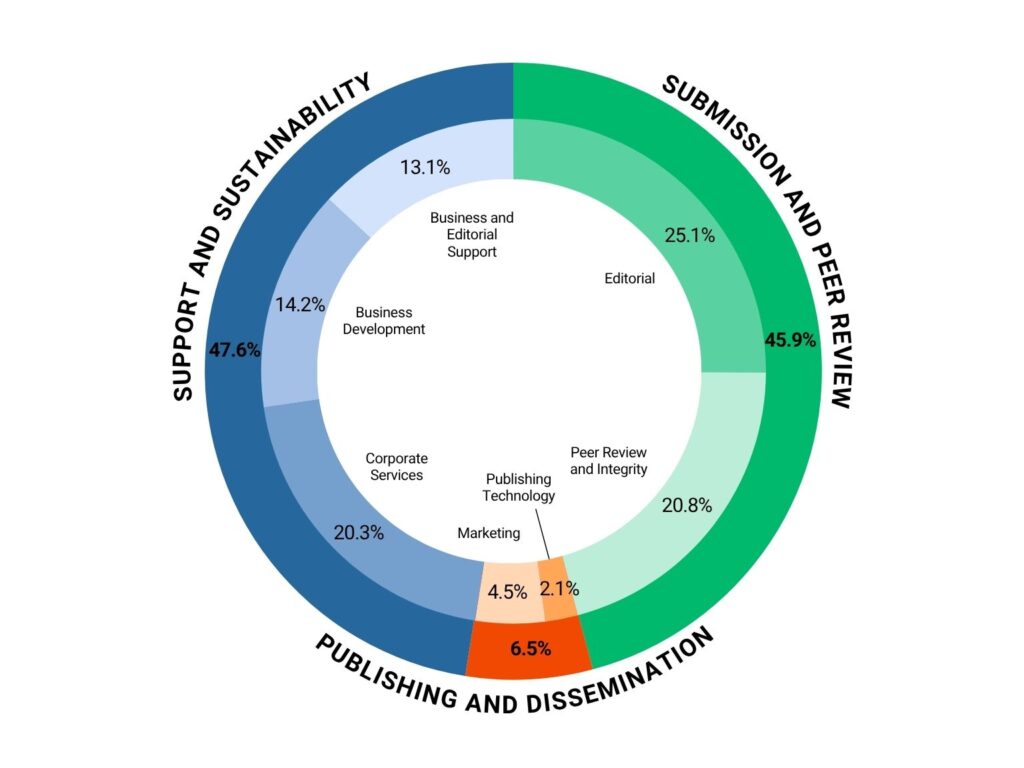

Canada’s revised Tri-Agency Open Access Policy on Publications (2026) was released earlier this month, and Canadian Science Publishing (CSP) welcomes it. The policy will make more publicly funded Canadian research free to read as soon as it is published. That is a goal CSP shares and has long supported.
Libraries, funders, publishers, scholarly societies, and researchers all share a common goal: to make research widely discoverable, accessible, and useful to the people and communities who rely on it. Open access (OA) helps achieve that goal by removing barriers for readers. However, while open access makes research free to read, it does not make research free to publish. As the policy takes effect, the question for all of us is how to sustain the work behind that openness, including the Canadian publishing infrastructure that does much of it.
CSP has always allowed authors to share their accepted manuscripts immediately, without embargo, well before the policy required it. This means CSP authors funded by CIHR, NSERC, and SSHRC can already deposit their author accepted manuscripts (AAMs) in a Canadian repository as soon as their article is published. CSP authors are also free to add a Creative Commons licence (CC-BY) to the manuscript they are depositing to fully comply with the policy. In this post, we share what goes into producing AAMs, using CSP’s publishing operations as one example. As the scholarly community considers different paths to open, it is important to recognize that openness still depends on the people, systems, and expertise that make research trustworthy, discoverable, and part of the scholarly record.
The theme of International Open Access Week 2026 is “The cost of knowledge”, so we wanted to revisit what it costs CSP to produce a green open access article, building on a blog post from last year titled “What it really costs to publish a research article.”