Ben Rutledge

Ben is a PhD student in the Department of Biochemistry of the Schulich School of Medicine & Dentistry at Western University. His current research explores the biochemical and biophysical mechanisms behind protein aggregation and phase separation.

Redactions: New hiring practices promote diversity and success in faculty hires

October 29, 2025 | 5 minute read

Despite the growing number of women earning advanced degrees across the sciences, women make up a minority of new faculty hires at many Canadian universities. At Memorial University’s Department of Biochemistry, women made up only 20% of new hires between 2010 and 2020, even though half of PhD graduates in related fields were women.

The department wanted to know: why the gap?

Their answer: implicit bias in faculty hiring. And their solution to the problem might inspire other hiring committees across the country.

.

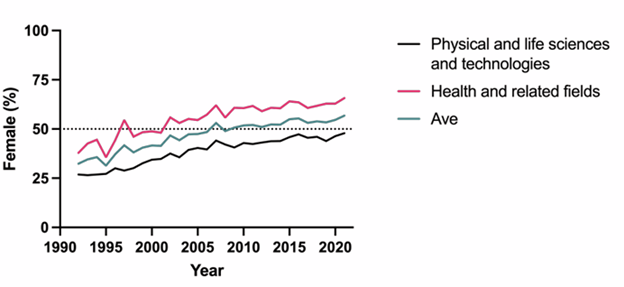
Data from Statistics Canada shows that the percentage of Doctoral Degree or equivalent recipients who identify as female has increased over the decades.

Read “Equity in action: a 4-year journey towards gender parity and racial diversity in biochemistry hiring” by Christian et al.

Why qualified women weren’t getting hired

Implicit (or unconscious) bias can subtly influence decision-making, even when we’re trying to be fair. Things like names, institutions, or even career gaps for parental leave can unconsciously shape perceptions of a candidate’s qualifications. Approaches such as training hiring committees in unconscious bias, ensuring diversity within hiring committees, and including equity advocates in the hiring process can reduce the impact of implicit biases.

However, despite following guidelines from the Canada Employment Equity Act and making efforts to diversify their hiring committees, the Biochemistry department saw little change in gender representation over a decade. That’s when they decided to try something new.


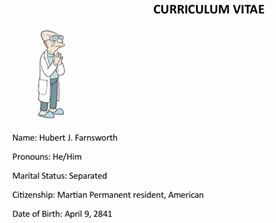
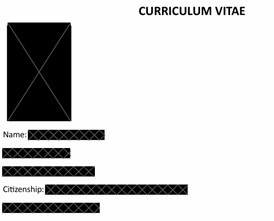
Information was selectively redacted (right) from original applications (left) to remove any information that could lead to potential biases from the hiring committee.

Intervention strategies: Redaction and advertising

In 2021, the department launched a four-year pilot project that changed two key parts of their hiring process:

  1. Redacted applications: Before the hiring committee reviewed any files, all identifying information was removed. That included names, institutions, countries, parental leave info, and anything else that might hint at the candidate’s gender, ethnicity, or background.
  2. Transparent job ads: Revised job postings emphasized these new equity-focused aspects of the hiring process to encourage more women to apply.

Reviewers would first score candidates using the redacted versions, then re-evaluate the full applications and reference letters only after shortlisting. While this second stage would inevitably reintroduce some bias risk, it helped ensure a holistic evaluation. For example, outreach and community-focused work were often lost through redaction.

So… did it work?

Yes! The results speak for themselves:

  • The proportion of women offered positions soared from just 20% before the intervention to 80% afterward.
  • The number of women applying didn’t change significantly, suggesting that it wasn’t a larger applicant pool driving the difference, but the more equitable evaluation process.
  • The process also improved interview chances for racialized candidates and preserved high offer rates for racialized top scorers.

The use of redactions during the initial stages of the hiring process had a huge impact on improving the representation of women amongst new hires. However, there were also some unexpected benefits to the redactions. This new hiring process also improved interview chances for racialized candidates, leading to a higher number of job offers, despite this study largely focusing on gender equality

Hiring committee members reported unexpected benefits, too. Many reported relief that they no longer had to attempt to consciously reduce any implicit biases.

“It made a world of difference to them because they could just focus on the application,” said Dr. Mark Berry, co-author of the paper reporting the department’s findings. “They weren’t having to constantly check whether they were letting their unconscious biases come to the forefront.”

The use of evaluation rubrics also became more common, helping evaluators stay consistent. And, because applicants were anonymous during early review rounds, premature conflicts of interest were avoided.

“We didn’t go into it with HR expertise or anything like that; we did this based on science,” said fellow author Dr. Sherri Christian. “It is important to acknowledge that we are far from experts in this area. At the start of this process in 2020, we were largely unaware of existing literature in the area. Nevertheless, we feel that our real-world experience in this exercise could inform practices in other departments, particularly in STEM fields.”


A collection of articles highlighting how inclusion improves research and offering strategies to embed equity, diversity, inclusion, and accessibility in science culture. EXPLORE THE COLLECTION

The takeaway

In just four years, the Department of Biochemistry hit the Government of Canada’s 50–30 challenge: 50% women or gender-diverse individuals and 30% from other equity-deserving groups.

What’s even more remarkable? They did it without specialized training or costly consulting, just a willingness to try something different.

“We just wanted to make a difference in our department, make things more diverse, more equal. Then I was tracking it, and I realized, we’ve made this really important difference,” said Dr. Christian. “Since the effects of this relatively simple exercise have been overwhelmingly positive. It emphasizes the ability of willing units to make meaningful change in the absence of internal ‘expertise’, or time-expensive formal training programs.”

Will it catch on?

“Positive peer pressure is a big deal. I would really like to see if somebody came back to us and said, hey, we tried that and this worked for us,” said Dr. Christian.

“Find something that works for your department, whether it’s starting with what we did and modifying it, or even if you’re just sharing the paper and using that as a starting point for a conversation,” suggested Dr. Berry.

This positive peer pressure extends past hiring practices.

“You have to think about the impact beyond just being fair and having a diverse department,” said Dr. Valerie Booth. “We all teach, so there’s an outsized impact because we’re standing up in front of these classes of 200 students all the time. And seeing us has a big impact in itself, but seeing us do something to change systems, I think, also has an impact.”

For the full success story and all details of the redaction implementation, check out the department’s paper, “Equity in action: a 4-year journey towards gender parity and racial diversity in biochemistry hiring.”

Ben Rutledge

Ben is a PhD student in the Department of Biochemistry of the Schulich School of Medicine & Dentistry at Western University. His current research explores the biochemical and biophysical mechanisms behind protein aggregation and phase separation.