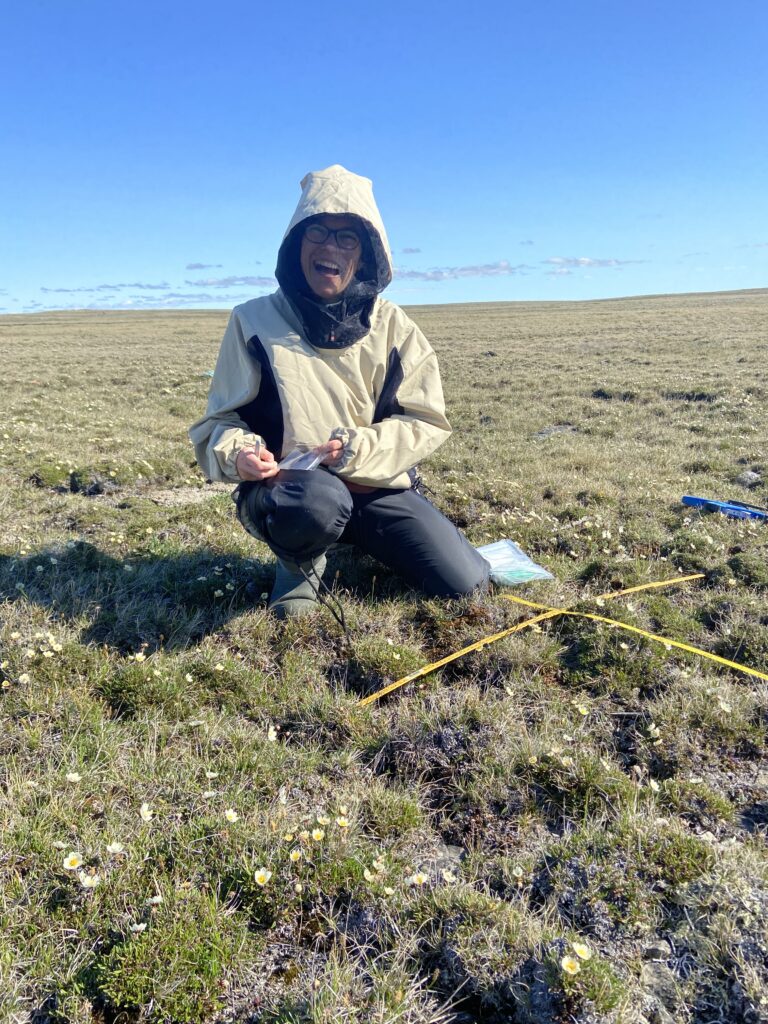
For Arctic field biologists, life involves a lot of planning. Months ahead of each field season, there are permits and grants to secure, equipment to order, travel to coordinate, and late-night calls with team members across time zones. Then there are supplies to pack: gear, clothes, water bottles and rolls of duct tape, sharpies and schedules, notes and passports, perhaps a chocolate bar or extra socks. Everything is constrained by a simple reality: it all needs to fit into a backpack, and nothing can be forgotten. In remote areas, there’s no going back for a toothbrush when you’re a week-long boat trip from the nearest town. When the journey finally begins, the stresses of preparation melt away.
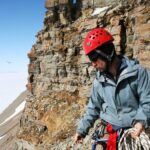
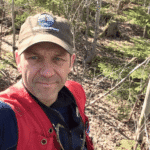
Dr. Isabel C. Barrio knows this world well. A professor in the Faculty of Environmental and Forest Sciences at the Agricultural University of Iceland, she studies how plants and herbivores interact in tundra ecosystems. These dynamics shape food webs and landscapes, and play a critical role in how arctic ecosystems respond to climate change. What might look like insignificant interactions can have outsized effects, especially in a region that’s changing rapidly.
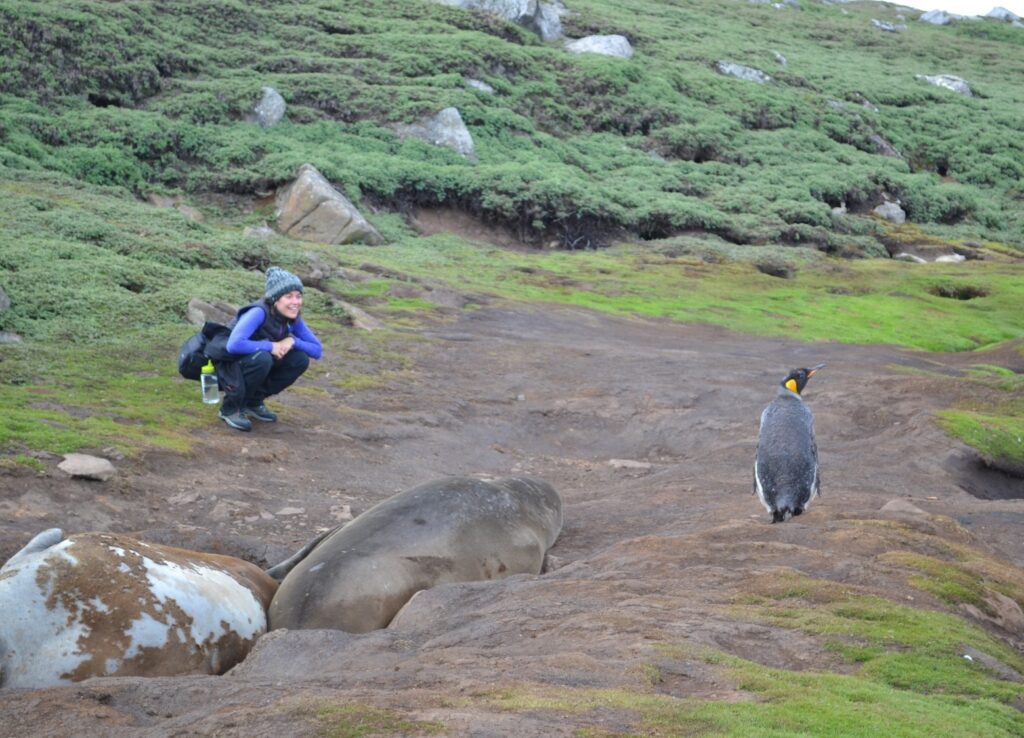
Dr. Barrio leads two international research networks, and is the newest Co-Editor-in-Chief of Arctic Science. She is driven by discovery and a sense of adventure. In this interview, we discuss her favourite moments from the field, what it really means to be a researcher, and what it’s like to meet an elephant seal face-to-face.
 Coordinating research can be complex, but I’ve found the Arctic research community to be exceptionally welcoming and collaborative. We all work in remote environments and deal with similar challenges – unpredictable weather, short field seasons, ever changing plans – so there’s often a shared sense of problem-solving and mutual support.