Jessica Reid

Jessica Reid is the Editor Engagement Coordinator at Canadian Science Publishing.

Addressing gaps in marine fisheries science: Part I

January 26, 2026 | 9 minute read

Marine fisheries in Canada have a long and storied history. The importance of marine fisheries in what are now considered Canadian waters resulted in many of the most influential fisheries scientists in the field having ties to Canada. As a result, fisheries scientists in Canada felt a strong sense of community.  Unfortunately, over the last couple of decades, opportunities for Canadian fisheries scientists to meet and discuss their research domestically have been in decline, inevitably weakening ties within the community.

This year, we brought together marine fisheries scientists from Canada’s three oceans at the annual Society of Canadian Aquatic Sciences (SCAS) conference (this is the conference formerly known as CCFFR) in an effort to rekindle links between fisheries scientists from across the country. Given the positive reception we received, we hope to make this an annual event and to expand on the day of talks we had this year. The Canadian Journal of Fisheries and Aquatic Sciences and its publisher, Canadian Science Publishing, have graciously invited four of the researchers who presented at our session to discuss their research with a broader audience in the following interview.

Joseph Barss

Joseph Barss earned a Masters of Science in Statistics at Dalhousie University and is now a Biologist at Fisheries and Oceans Canada.

My modelling goal was to use trawl survey data to create an index of relative lobster abundance in the study area. It is possible to do this relatively easily using a design-based index if trawl surveys follow a consistent stratified sampling design every year, but the data I used came from two different survey programs, both of which had changed their sampling strategies over time. Other issues included the absence of data from one of the survey programs in 2020 due to the COVID pandemic. I needed to build a more complex model for these data, with elements to address each of the factors that could affect the observed lobster counts. I accounted for the different gear types using a simple categorical predictor, the different swept areas of the survey tows using an offset, and the distance between the tow locations using a spatial random field. Creating a model-based index such as mine can require some extra work, but it is a good choice if survey data contain certain kinds of irregularities.

I graduated with an Honours Bachelor’s degree in Mathematics from Mount Saint Vincent University, specializing in statistics. Initially, my other interests were mainly in economics and political science, but my first exposure to the possibility of applying statistics to marine science came from a summer internship at the Centre for Marine Applied Research in Dartmouth, Nova Scotia. I worked on processing ocean temperature and dissolved oxygen data from their coastal monitoring program and realised that Halifax was an important centre for ocean research. I am also pleased to have the opportunity to collaborate with biologists on my lobster research. Because ocean data, many of which are “noisy,” are collected in very high quantities, I believe there will always be interesting problems in the marine sciences for statisticians to work on.

Ellie Weise

Ellie Weise is a PhD Candidate at Dalhousie University studying genetic techniques for Atlantic halibut population management.

Close-Kin Mark-Recapture (CKMR) is an emerging technique that uses genetic information to estimate total population size. This calculation uses a method analogous to traditional mark-recapture, and both methods can be integrated within a larger stock assessment framework to estimate abundance, survival, and fecundity for a given study system. There are key differences between the two techniques, as well as between CKMR and all other existing stock assessment frameworks, that can make one or the other more appropriate for a given stock.

In a traditional capture-mark-recapture study, there are two physical sampling periods for the population: the first sample consists of all tagged fish, which are marked with a clip or a tag. The sampled fish are then given time to reintegrate into the population. The second sample is subsequently taken, and the total population size is estimated based on the number of tagged fish that were resampled. For a new method to supplement or replace these traditional methods, it needs to represent a significant advancement in resolving long-standing issues in the field, such as high costs, tag loss, the exclusion of lethal sampling, fishing and reporting bias or misreporting, and research footprint.

In the CKMR approach for estimating population abundance, a sample of individuals is genetically sequenced, and pairs of related individuals, or kin pairs, are identified. The probability of these kin pairs occurring in the population is then used to estimate the total population size within a mark-recapture-like framework, where the kin pairs are substituted for the tags. The resulting estimate is independent of reported metrics such as landings data, and there are no physical tags to lose or recapture. Additionally, due to the nature of collecting genetic data, dead and single-capture individuals can be used in the abundance estimate, sometimes even with a single time point. From a sampling perspective, taking a fin clip for genetic analysis is a fast and simple procedure that can be conducted while other activities are occurring on a boat, allowing genetic work to ‘piggyback’ off other fishing and research activities through collaborations rather than needing directed research trips. This ability can significantly reduce the research footprint needed to estimate population abundance compared to traditional techniques.

The true value in the CKMR approach, I think, lies in its flexibility and adaptability to a variety of species, life histories, and sampling approaches. The flip side of that is that CKMR is inherently an interdisciplinary approach, requiring sampling, statistical, and genetics experts to produce robust estimates with representative sampling and a well-constructed model specific to the system. CKMR must be conducted carefully and with multiple types of experts to be successful, but when properly considered, it could vastly improve the assessment of many exploited and endangered species.


An epigenetic aging clock utilises how chemical modifications to DNA change as living organisms get older to estimate age. Specifically, these clocks use DNA methylation, which occurs when a methyl group attaches to a DNA base (usually cytosine, or the “C” in the A,C,T,G of the DNA alphabet) to alter the activity of a region of the genome. Methylation rates can impact the expression of different genes and can be influenced by the environment, stress, and, in a small group of sites, methylation changes with age. These sites can be identified and used to estimate age after methylation rates have been calibrated with individuals whose age has been determined through a different method.

These aging clocks were first developed in humans and have since been created for an increasing variety of species, from trees to cows to our work in Atlantic halibut. In populations of wild fish, they can be used to age fish without killing them or in species where other aging methods are not reliable or economically feasible. Many of the aging clocks, like the one for Atlantic halibut, are developed for a single species or population, although several studies have identified aging clock sites that have worked for multiple species. However, the epigenetic aging sites used in the clocks are not universal across species, so the calibration process needs to be repeated for new species and systems where epigenetic aging is needed

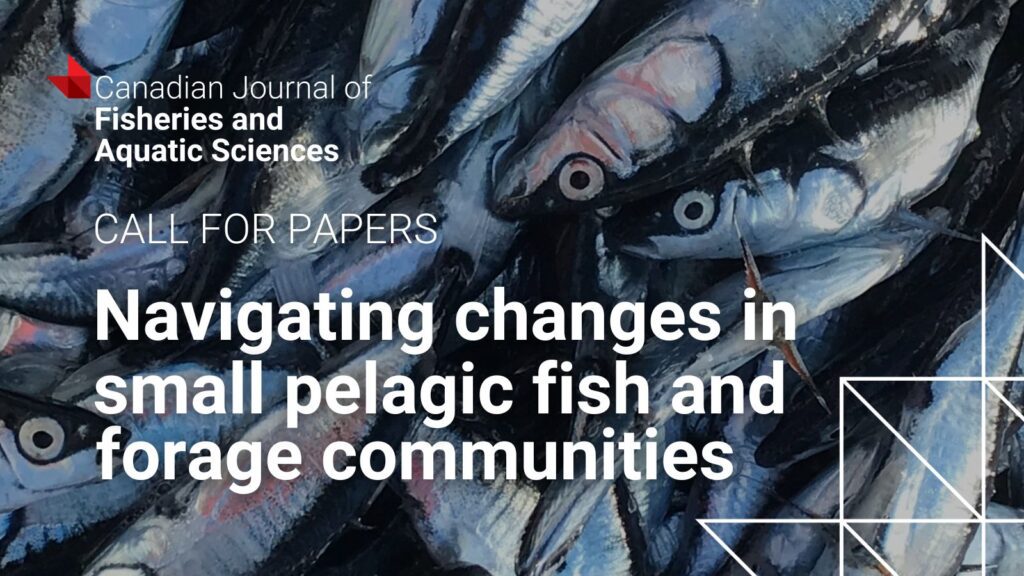
Small pelagic fish make up more than 30% of the global fisheries catch. A new collection explores their role in food webs, ecosystems, and sustainable management. LEARN MORE

David Keith

David Keith is a Research Scientist in the Scallop and Benthic Habitat Unit with Fisheries and Oceans Canada.

The importance of ‘boom years’ should not be particularly surprising to many fisheries scientists, as these boom years are essentially periods in which large recruitment pulses are observed in populations. The eternal challenge in fisheries science is explaining when, where, and why these booms occur (or don’t occur). The lack of these boom years for several stocks is really where my interest lies; why does a species in one environment experience ‘booms’ after a few years of being at relatively low abundances, while in another environment, the same species hasn’t experienced a boom in decades? The most obvious example of this is Atlantic cod, where stocks in European waters appear to be far more productive (they boom regularly) than cod in Canadian waters. The main takeaway for management and conservation is that broad generalizations based on species life history traits are far less important than understanding the impact of the environment in which the species finds itself. The trick is to find out what makes a particular population tick.

The easy answer here is ‘we don’t know’ what the factors are; it is some complex combination of biology, ecology, environment, and exploitation history. We all know that the environment matters. Why does one river system support a large population of fish while the neighbouring river does not? Why do we worry about climate change? Once we thought more about it, really making models using generic life histories that ignore the impact of the environment started to seem kind of silly in an applied setting. Don’t get me wrong; these things are very useful as a theoretical academic exercise for sure, but if we are trying to make models that inform rebuilding (for example), I think there are much more effective ways to use our resources to understand.

If there is one thing that has come from this project, it is that I want to do better at saying “I don’t know.” For example, when we do not know how the environment mediates population dynamics (which I’d argue is basically always) and we don’t understand the local population dynamics, I think we need to look for alternative ways to manage the rebuilding of collapsed populations. It has long struck me as odd that we put so much effort into building these general life-history models without a real understanding of the basic ecology of a particular population. Before this, I thought, ‘well, ok, this is fine; something is better than nothing,’ but I am becoming increasingly worried this is a bad idea, especially in the context of managing collapsed populations. Sure, it gives us numbers, but we get reassured by having something quantified, even if those numbers may be completely inappropriate for a given population.

As an applied scientist, I really think we would all benefit from admitting when we do not know something. By always giving an answer, decision-makers will believe you until they don’t (irrespective of how many caveats you put around the answer). We need more conversations like “I know you wanted a recovery target, but I am unable to provide you with a number that will appropriately inform your decision because we don’t know enough about this population. However, I can summarize what we know and do not know about this population; how can we use this knowledge to help guide management strategies?” And fewer conversations like “The recovery target is 100,000 ± 1,00,000”.

Stephanie Boudreau

Stephanie Boudreau is a Research Scientist in the Crustacean Section for Fisheries and Oceans Canada.

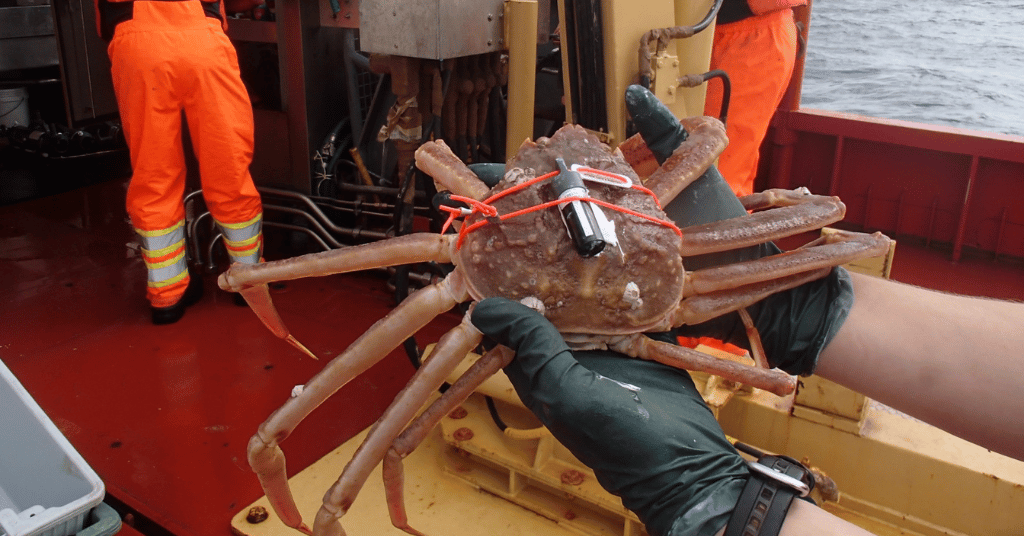
Honestly, I was excited to observe that the project worked! We tagged snow crab with electronic sensors and then released them back into the ocean into a relatively small acoustic receiver array off Cape Breton, Nova Scotia, and we got data!Most of the behaviours matched our expectations based on previous research. Snow crab are cold-water animals, so they spent most of the year in deep, cold waters. One female crab even recorded a depth observation at 160 metres!

What stood out was how well the temperature sensors tracked seasonal changes in bottom water temperature. The warm waters that oceanographers have been observing in the fall were also picked up by the crab tags. Some of the temperatures recorded in summer and fall were warmer than what we’d typically expect for snow crab in the southern Gulf of St. Lawrence.

While predicting future snow crab habitat under climate change goes beyond the scope of this project, our findings can support that research question. In the southern Gulf of St. Lawrence, snow crab are usually found in the coldest waters available, between about -1 and 3 °C. The tagged crabs mostly stayed within that range, but some were recorded in warmer waters, up to 5 °C and occasionally even higher. Even though the amount of cold water changes from year to year, there is still a good amount of suitable habitat for now. However, snow crab are sensitive to warm water temperatures. Around 7 °C is considered a tipping point; above that, their metabolism speeds up too much, which can cause stress and even lead to death. As we approach the end of the century, we are likely to see changes in where snow crab can live and be fished, especially in parts of the southern Gulf that are warming the fastest.

Learn how Ellie, Joseph, Stephanie, and David envision the future of Canada’s marine fisheries in the upcoming Part II of this series.

Jessica Reid

Jessica Reid is the Editor Engagement Coordinator at Canadian Science Publishing.