It’s not a good time to be a lake. Pollution from road salt, mining, and agriculture are reshaping ecosystems with cascading effects that ripple through food webs. Wetlands, which act as both natural water filters and homes for wildlife, are being drained for farming or urban development. Invasive plants and animals are disrupting delicate interspecies dynamics. Add climate change to the mix, and it’s like slowly turning up the heat in a pressure cooker, intensifying the stress on lake ecosystems, from tiny zooplankton to the fish we catch and the water we drink.
Most of us are unaware of the plight of our local rivers and lakes, even though many of the problems begin at our docks, driveways, and yards. But for aquatic researchers, stress is high as they watch in real-time as the delicate balance of aquatic life unravels.
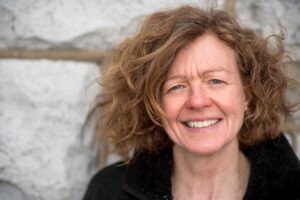
Dr. Shelley Arnott, a leading freshwater ecologist and professor at Queen’s University, is not one to shy away from complex problems. Her research tackles critical threats like salinization, calcium decline, climate change impacts, and invasive species. Times are tough for Canadian lakes, and it’d be easy to feel defeated.
But not for Dr. Arnott, the 2025 recipient of the Frank Rigler Award. To her, it’s a call to action and an opportunity to create a conservation story that inspires hope.
“I need to bring in some good stories,” Dr. Arnott says, reflecting on her efforts to counter the overwhelming sense of environmental doom often felt by her students. She points to Sudbury, Ontario, as a beacon of hope. Sudbury was once devastated by acid rain and industrial pollution, but is beginning to thrive again thanks to community-led restoration efforts. “The lakes are recovering and fish populations are coming back. It’s an amazing good news story,” she says. “We need more of those.”
This optimism is rooted in her belief that science is the foundation for meaningful change. “I might not save the world completely by working on road salt,” she says, “But I can make an impact.”
In this hopeful conversation, we talk to Dr. Arnott about the big problems facing Canadian lakes, local initiatives and global collaboration, and how to drive change. There’s always a chance to make a difference, one lake, one experiment, and one good news story at a time.
Salinization from agriculture, mining, and road salt application is a big problem, yet many people don’t realize its impact. Could you explain how salinization impacts our ecosystems?
Road salt has a big impact on aquatic ecosystems. The salt we put on roads, sidewalks, and parking lots eventually makes its way into lakes, rivers, and wetlands. How it gets there depends on the infrastructure in the area. In urban areas, salt flows through stormwater systems, which are pretty much direct pipelines into lakes. For instance, at Queen’s University, I often think about how road salt here likely ends up in Lake Ontario.
 Road salt also gets into soils and groundwater, seeping in slowly over weeks or months. So, you get two types of salt increases: pulse increases from stormwater runoff and long-term increases from groundwater seepage. In river systems, such as those monitored by the Credit Valley Conservation Authority around Toronto, salt levels spike in spring as melting snow flushes it into waterways, followed by a drop. However, I’m more concerned about the long-term increase caused by the groundwater movement. It means that salt levels continue to increase year-round, even in the summer when we’re not applying road salt.
We’re seeing long-term increases in salinity in lakes everywhere, both in urban areas and in more rural places like Muskoka. For example, chloride levels in Lake Simcoe have risen from 10 mg/L to over 60. In Muskoka, levels have increased from less than one to around six milligrams per liter. While this may seem minor, research shows that even in soft water lakes, chloride concentrations between five and 40 milligrams per liter can have significant ecological impacts. In lab studies, we’ve observed reduced Daphnia reproduction and increased mortality within this range. These changes affect entire aquatic communities, leading to decreased abundance across taxa and shifts in species composition. Sensitive species like cladocerans and copepods decline, while more tolerant organisms, such as rotifers, persist. This restructuring of the community has cascading effects throughout the food chain.
 When you lose zooplankton, which are important grazers, they can no longer control phytoplankton abundance. As a result, we see an increase in phytoplankton. What’s even worse is that the phytoplankton composition changes. As salt increases, green algae—the good, nutritous algae—decreases, and cyanobacteria increase. Cyanobacteria are more resistant to salt, and with no grazing pressure, they thrive. Cyanobacteria are bloom-forming algae, and some of them produce toxins. This poses risks to drinking water, pets, and swimmers. It’s not good for the environment, and it’s not good for the community. It’s a double whammy.
Daphnia are the focal species for the Global Daphnia Salt Tolerance Project (and they’re also part of your lab logo!) Readers might remember working with Daphnia in their undergraduate biology labs, but could you give us a refresher? What are Daphnia, and what makes them a good model organism for studying the effects of increasing salinity on freshwater ecosystems?
Daphnia are crustacean zooplankton, and they’re filter feeders, which means they eat algae. There are a few reasons we use them. One is that they’re a key player in lake ecosystems. They’re relatively large grazers compared to other zooplankton, so they play a significant role in energy flow. They’re also sensitive to various stressors, including salt.
From a practical standpoint, they’re easy to grow in the lab and, most importantly, they can reproduce asexually. This means we can take an individual Daphnia and use her offspring, which are all genetically identical, and subject them to different treatments. This way, we know that any effects we see are due to the treatment, not genetic variation.
Of course, there’s a downside to this, though. When we do these studies, it’s as though we’re testing one individual. That’s why we did the Global Daphnia Salt Tolerance Project where we tested almost 100 Daphnia pulicaria from about 65 lakes in North American and Europe to examine variation in salt tolerance. We were surprised to see how much variation there actually was, suggesting that there may be potential for adaption to increasing salinization.
The Arnott Lab focuses on pressing environmental issues in your region, such as road salt runoff and invasive species. How do you see localized research contributing to more effective solutions for environmental challenges?
Yeah, I’ve become a strong advocate of global research. Of course, all research starts locally, but teaming up with others with similar interests in large-scale experiments allows us to learn a lot more. I often worry whether lab findings apply to real-world conditions, so we always couple lab studies with complementary field studies to see if we get the same results.
The Global Salt Experiment emerged from inconsistencies in the literature. Previous studies suggested salt only affected Daphnia at very high chloride levels (600–800 mg/L), but our lab tests showed sensitivity at much lower concentrations. This made me question why our results differed so dramatically, prompting the global project to determine if this sensitivity was unique to our study or a broader issue.
The idea took shape at a GLEON (Global Lake Ecological Observatory Network) meeting. GLEON focuses on long-term monitoring, and members like Hilary Dugan and other GLEON colleagues had already compiled North American chloride trends, revealing widespread increases. I told you about Lake Simcoe, but it is clear this was a continental issue. During the 2017 GLEON meeting, a group of us interested in salt’s ecological impacts began discussing collaboration. We proposed testing zooplankton sensitivity globally, and the project gained momentum as others joined in.
I have to say, I’m amazed by how it all came together. I remember being at an Association for the Sciences of Limnology and Oceanography (ASLO) meeting and telling people about the project. Someone asked, “Where did you get funding for that?” And I said, “Oh, we didn’t get any funding. We just did it.” People found small grants or tacked it onto other projects. It’s amazing how we pulled it off, it was a huge effort. A six-week mesocosm experiment isn’t trivial, and we had 16 of them across North America, Spain, and Sweden.
The results were striking: while zooplankton in California and Sweden were salt-tolerant, most communities elsewhere were highly sensitive. This confirmed salt’s widespread ecological impact and raised new questions about what drives this variation. We examined factors like water hardness but found no clear patterns among any of the chemical or biological variables that we measured, leading us to focus more deeply on this question now using a series of field and lab experiments.
 Calcium decline is a growing concern, particularly in softwater lakes in regions of Northern Ontario. The primary cause is acid rain, which has depleted calcium from soils over decades. Calcium is essential for aquatic organisms, particularly crustaceans like

 If I could pursue a dream project, it would be a whole-lake ecosystem study focused on the effects of salt. While I’ve explored salt through lab studies, mesocosms, and global experiments, the next step is examining ecosystem-level impacts. I’d investigate how salt influences nutrient cycling at the sediment-water interface, lake stratification, and spring turnover. Existing research shows salt affects stratification, but a whole-lake experiment could reveal more. It would also allow us to test resilience by exposing the lake community to additional stressors, like heat waves or nutrient changes, at different stages of the experiment.