Canadian Science Publishing

Led by a team of dedicated researchers, Canadian Science Publishing is an independent, not-for-profit publisher committed to enhancing the reach, rigour, and relevance of science so that people can find, trust, and use it.

Cultivating Change with Dr. Judith Nyiraneza

July 17, 2025 | 7 minute read

In this interview, we sit down with Dr. Judith Nyiraneza, the newest co-Editor-in-Chief of the Canadian Journal of Soil Science. From championing regenerative farming practices to leading a pan-Canadian network of living labs, Dr. Nyiraneza is helping to shape the future of sustainable agriculture in Canada.  

You may have seen her featured on CBC News for her research on regenerative soil management practices—farming methods that restore soil health while enhancing productivity and resilience in the face of climate change. She leads one of Canada’s living laboratories, a unique project that brings together farmers, scientists, and industry partners to co-develop climate-smart agricultural practices in real-world conditions. Her work is grounded in a vision of agriculture that is both environmentally responsible and economically viable.  

In addition to her research, Dr. Nyiraneza holds adjunct professorships at three Canadian universities and is a dedicated mentor to students and early-career scientists. She was recently recognized as one of the six 2023 Influential Women in Canadian Agriculture and as a 2024 Canadian Society of Soil Science Fellow 

In this interview, Dr. Nyiraneza shares her thoughts on the importance of soil health, the power of community in science, and the value of patience and resilience in both research and life. 

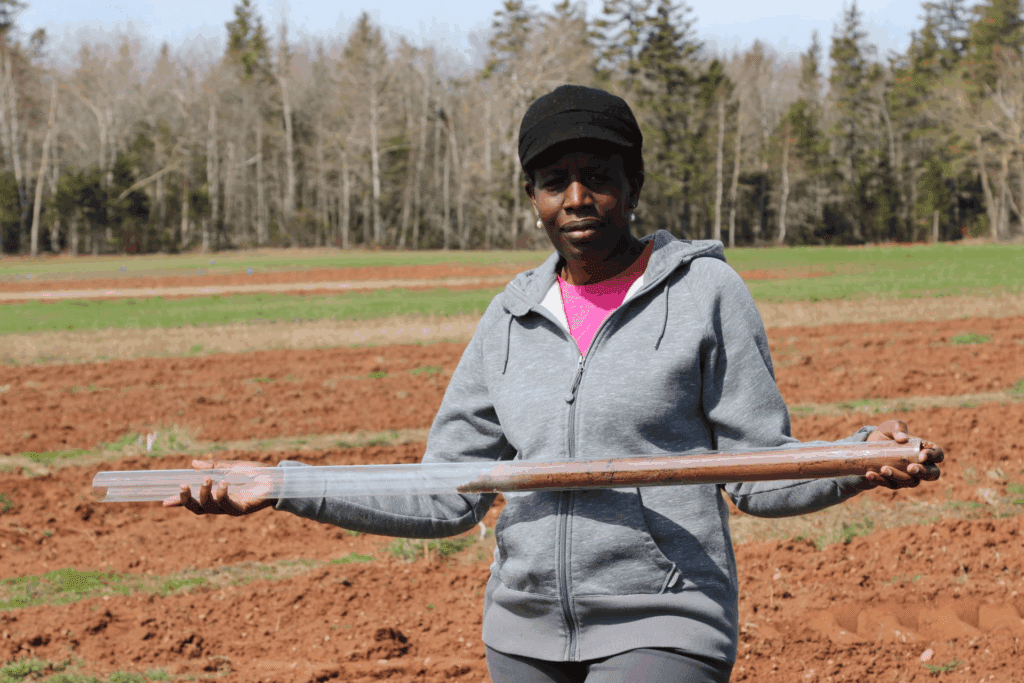
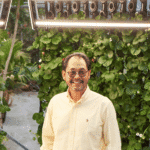
Judith Nyiraneza

One of your main research focuses is regenerative soil management practices. What is regenerative agriculture? 

Regenerative agriculture could be defined as a process of using farming practices that are based on ecological principles to restore degraded soils. It implies considering interactions among all living organisms (soil, water, plants, animals, and humans) and their environments. It is expected to enhance crop yield and quality and make the soil healthier and more resilient to climate change while ensuring profitability and minimizing the negative environmental effects. Regenerative crop and soil management practices include, but are not limited to, selecting crop varieties that resist disease, crop rotations, intercropping, planting pathogen-free seed, integrated pest management, use of organic amendments, cover cropping, management to reduce soil compaction and soil erosion, and management to reduce our reliance on mineral fertilizer. 

Soil science doesn’t always get the same time in the spotlight as other environmental sciences. Why should soil health matter to everyone? 

The soil supports our lives in many ways by producing our food, by filtering and purifying the water we drink, by mitigating climate change through sequestrating significant amounts of carbon, and by being an important reservoir of biodiversity. The standing Canadian Senate Committee on Agriculture and Forestry designated soil as a strategic national asset. While extreme weather events are adding uncertainties in food production, we are expected to increase food supply to meet the increasing global population. Caring for our soils implies securing our future and those who will come after us. 

Established in 1921, the Canadian Journal of Soil Science publishes international fundamental and applied research from all areas of soil science.

You lead a pan-Canadian living laboratory. Can you tell us a bit about this project and what makes it unique? 

Agriculture and Agri-Food Canada has built a network of 14 living lab projects across the country, all aiming to address the complex and emerging environmental challenges focusing on developing farming practices that enhance carbon sequestration and mitigate greenhouse gas emissions, in addition to providing environmental co-benefits. The uniqueness of this innovation approach is that it brings together farmers, scientists, and other sector partners to co-develop, test, and evaluate farming practices under real-world conditions, supported by strong scientific studies to demonstrate the effectiveness of the practices under development. All involved partners work together from the beginning to the end. First, they get together to discuss the issues they want to address and identify possible solutions to address them. Subsequently, they test these management practices in commercial fields or at watershed scale rather than at plot scale and then work on an ongoing basis to improve them, ensuring they are effective and responsive to the producers’ needs. In this way, a living lab is a producer-centered innovation approach where partnership, knowledge, and networking are important pillars. For instance, in Prince Edward Island, we have more than 20 partners working together under the ongoing project. By involving end-users and scientists from the beginning, the likelihood of coming up with solutions to tackle complex environmental issues increases and the subsequent adoption of those successful farming practices by growers is accelerated. For more information, please see: Agricultural Climate Solutions — Living Labs. 

With a pan-Canadian lab and adjunct professorships at three universities, you’ve worked with a lot of different communities! Do you have a favourite community story? 

The different communities I work with are all equally important and contribute to my well-being. Being an adjunct professor gives me an opportunity to work with a younger generation who contribute significantly to achieving different milestones under funded projects. We also hire summer undergraduate students who help in collecting data. Working with growers and other professionals involved in agriculture gives me an opportunity to keep learning about several practical facets of farming. Above all, the most important community is my team with whom I interact on a daily basis and who oversee all research activities and help me supervise the students. I give all credit to my team for helping me succeed and excel in my role as a scientist. 

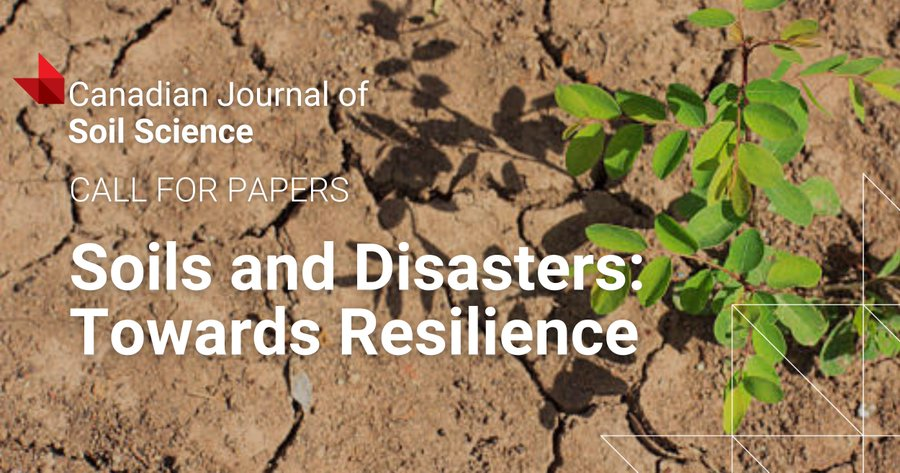
The Canadian Journal of Soil Science invites research on soils and resilience associated with disasters, covering topics like soil remediation, soil building, and nature-based climate solutions. LEARN MORE 

You’re working from PEI, so we must ask you about potatoes! You’ve worked on strategies to enhance phosphorus and nitrogen use efficiencies in acidic soils. Could you explain why this is such a critical challenge for potato farmers, and what solutions your research has uncovered? 

Potatoes are the fifth most important crop in Canada after corn, wheat, canola, and soybean, contributing around $2 billion in farm cash receipts in 2023. Phosphorus (P) and nitrogen (N) are the most limiting nutrients for potato growth, and supplying higher amounts than crop requirements constitutes an economic loss to growers but also negatively impacts the environment. 

Potatoes have poor nutrient use efficiency due to their shallow root systems and high nutrient demand to meet their rapid growth and development. Applying higher amounts of P and N than crop requirements results in an economic loss to growers and also negatively impacts the environment. P fertilizer is applied in excess of the potato P requirements in acidic soils to compensate for high P fixation by amorphous aluminium (Al) and iron (Fe) compounds, which are abundant in acidic Canadian podzolic soils. We developed an agro-environmental model for potatoes based on the phosphorus saturation indicator (PSI), which is the ratio between plant-available soil phosphorus (P) and Al (P/Al). We found that when the PSI was greater than 10 percent—when the amount of Al in the soil is more than ten times the amount of P (P/Al x 100)—potato plants were unlikely to benefit from further addition of phosphorus fertilizer. By adjusting phosphorus fertilizer application to this ratio, farmers could save up to 100 kg of phosphorus per hectare compared with the current recommendations. 

Developing a reliable nitrogen test that can reflect actual N availability at critical crop growth stages is challenging in humid environments like Eastern Canada due to the high variability and mobility of nitrogen. Our team has focused on quantifying soil N supply to subsequent crops using different techniques. Using a plant bioassay approach (total N accumulated in the whole plant in the absence of N fertilizer application), we found that the soil alone could supply an average of 115 kg N ha-1 to subsequent potatoes. We also used the 15N isotopic technique (which acts as a tracer to follow N transformation and movement) to quantify soil-derived N to silage corn with and without long-term regular application of manure (26 years). Regular application of manure reduced silage corn N fertilizer requirements by 50 to 100 kg N ha-1. At silage corn harvest time, 22-58% of applied N fertilizer was still present in the soil, 60-90% of which was stored in macroaggregates. The N stored in macroaggregates decreased by up to 75% over the winter, and little residual N was taken up by the following crop, implying that N stored in macroaggregates is transient. We also estimated cover crop-derived N contribution to potatoes using the 15N isotopic technique. We found that when crop residues were incorporated in the fall prior to seeding potatoes in the following spring, the N requirement of potatoes was satisfied more from soil-derived N than from previously incorporated crop residues in the absence of N fertilizer application. 

The living laboratory approach is all about collaboration. If you could invite anyone, living or historical, to join your research team for a season, who would it be and why? 

I would invite a grade 12 high school student who did not grow up on farm and who is planning to enroll in agricultural sciences. I would let him accompany my team in different activities, meet growers, and my colleagues working in different areas. This would give him an insider’s view of what he can expect and what the future job may entail. This opportunity would empower him and boost his motivation throughout his undergraduate studies and maybe inspire them to become a soil scientist!  

The Canadian Journal of Soil Science is launching a new Perspectives section. LEARN MORE

You were recently recognized as one of the six 2023 Influential Women in Canadian Agriculture. What advice would you give to young women starting their careers in the agricultural sciences?  

I would tell them that in science and in agriculture, there are many opportunities requiring different levels of education. They just need to pick an area of interest and go for it. It is important to do something we like because all difficulties along the way can be perceived as opportunities instead of obstacles. People working in agriculture and in the agri-food sector contribute to a certain extent to producing food to feed an increasing population or to sustain natural resources, and this is a fulfilling mission.   

Your work requires patience; some soil health improvements take years to manifest. Has working in soil science changed your outlook on time, growth, or resilience in your own life? 

Definitely. My outlook on time, growth, and resilience in my own life changed when I was a doctoral student. As many Ph.D. holders say, “you know when you start, but you have no idea when it will be over or whether you will ever have a chance to work in your area of specialty.” My current job is a perfect match for my area of specialty, and I feel very lucky. Being a researcher requires consistency, strength, determination, funding, resources, and time. More importantly, it is a team effort. Many people are involved in generating research data. There are highs and lows, and many factors beyond our control. The energy to keep going comes from our interest in continuous learning, openness to trying new things, and determination. The job shapes and compels us to be patient and resilient, both at work and in our personal lives. 

Stay updated on research and opportunities from the Canadian Journal of Soil Science.

X
Canadian Science Publishing

Led by a team of dedicated researchers, Canadian Science Publishing is an independent, not-for-profit publisher committed to enhancing the reach, rigour, and relevance of science so that people can find, trust, and use it.